
Prostate Radiotherapy
Prostate Cancer Surgery vs Radiation: What the ProtecT Trial Found
Compare prostate surgery, radiotherapy, and active monitoring using 15-year cancer outcomes and 12-year side-effect data from the randomized ProtecT trial.


Short answer: Surgery and radiotherapy both provide excellent long-term control for many people with localized prostate cancer. In the randomized ProtecT trial, neither treatment produced a statistically significant advantage in prostate cancer mortality, metastases, or clinical progression at 15 years. The choice is often about different side-effect patterns, recovery, logistics, and what matters most to the patient.
What did the ProtecT trial compare?
ProtecT enrolled 1,643 men aged 50 to 69 with prostate cancer detected through PSA testing in the United Kingdom. Participants were randomly assigned to:
- active monitoring with regular PSA testing;
- radical prostatectomy to remove the prostate; or
- external-beam radiotherapy with a short course of hormone therapy.
The trial began in 1999. Treatments, imaging, surgery, and surveillance have changed since then, but ProtecT remains unusually valuable because it directly randomized patients and followed them for up to 21 years.
Did surgery or radiation improve survival?
At a median of 15 years, prostate cancer death occurred in:
- 3.1% assigned to active monitoring;
- 2.2% assigned to prostatectomy; and
- 2.9% assigned to radiotherapy.
The difference was not statistically significant. Overall mortality was also similar among the three groups.
This does not prove that every treatment is interchangeable for every prostate cancer. Most participants had lower-risk, PSA-detected disease, although later review showed that more than one-third had intermediate- or high-risk features. Modern risk classification, MRI, targeted biopsy, genomic testing, and PSMA PET can provide information that ProtecT did not have.
What about metastases and progression?
Active monitoring resulted in more progression:
- metastases developed in 9.4% with active monitoring, 4.7% after surgery, and 5.0% after radiotherapy;
- clinical progression occurred in 25.9%, 10.5%, and 11.0%, respectively; and
- long-term hormone therapy was started in 12.7%, 7.2%, and 7.7%.
Surgery and radiotherapy produced very similar control on these endpoints. Active monitoring preserved the chance to avoid treatment—24.4% remained alive without prostate cancer treatment at the end of follow-up—but accepted a higher risk of later progression.
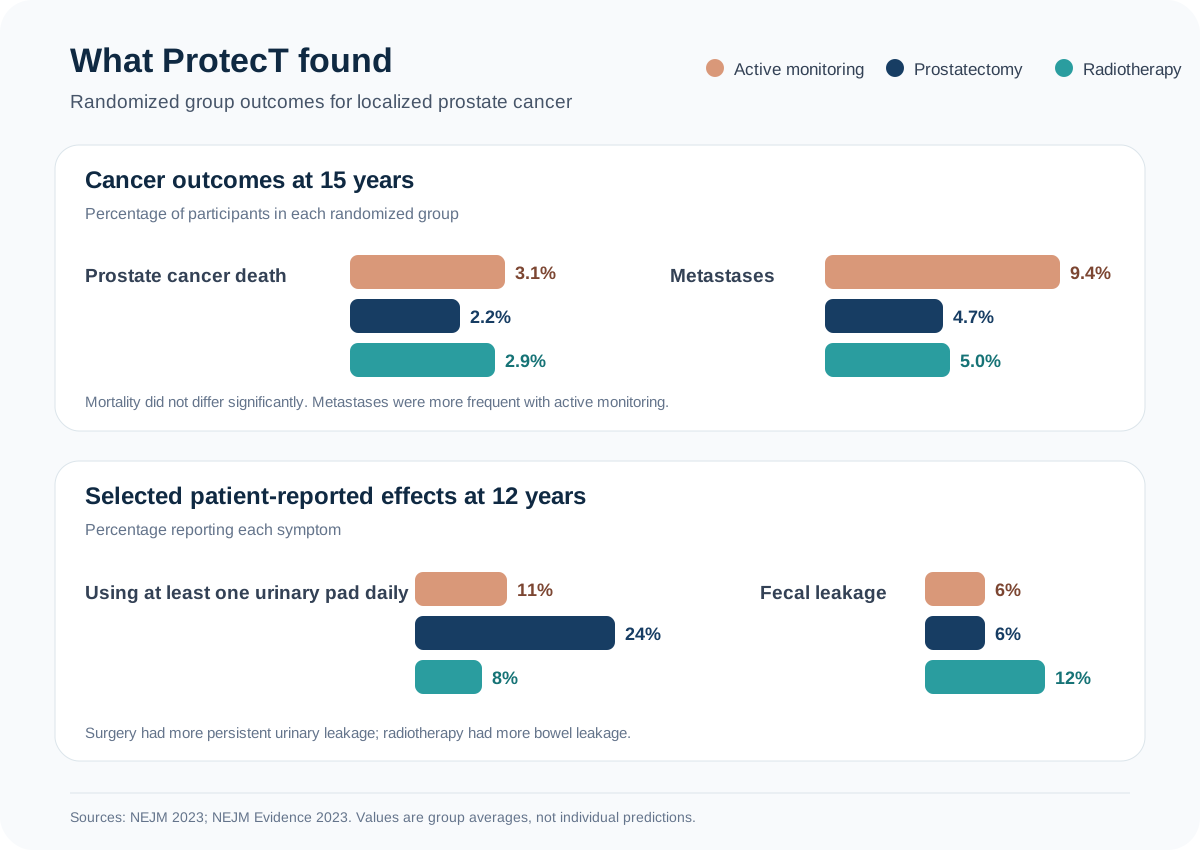
Original visualization of published ProtecT group outcomes. Percentages are group averages and should not be used as an individual risk calculator.
How do side effects differ?
ProtecT followed patient-reported urinary, sexual, and bowel function for 12 years. Generic quality-of-life scores were similar, but specific symptoms followed different patterns.
Urinary leakage
Urinary incontinence was most persistent after surgery. At 12 years, use of at least one pad per day was reported by:
- 24% after prostatectomy;
- 8% after radiotherapy; and
- 11% in the active-monitoring group.
Radiotherapy more often caused urinary irritation and nighttime urination. At 12 years, urinating at least twice nightly was reported by 48% after radiotherapy, 34% after surgery, and 47% with active monitoring.
Sexual function
Erections sufficient for intercourse declined sharply after both radical treatments, particularly soon after surgery. By year 12, rates were low and similar: 13% after surgery, 15% after radiotherapy, and 17% with monitoring.
Age, baseline function, nerve-sparing feasibility, hormone therapy, medications, and later treatments all influence an individual's outcome. These percentages do not predict one person's recovery.
Bowel function
Bowel effects were more common after radiotherapy. At 12 years, fecal leakage was reported by:
- 12% after radiotherapy; and
- 6% after either prostatectomy or active monitoring.
Modern image guidance, tighter treatment margins, MRI-based planning, and rectal-sparing strategies may change today's risk, but bowel symptoms remain an important radiotherapy discussion.
How do today's treatments differ from ProtecT?
ProtecT radiotherapy used a treatment schedule and hormone-therapy approach from an earlier era. Many patients today receive moderately hypofractionated treatment over about four to six weeks, or five-treatment SBRT when appropriate. Modern prostatectomy is often robot-assisted.
The trial's active-monitoring protocol also relied mainly on PSA. Current active surveillance commonly uses prostate MRI, repeat biopsy, PSA density, and other clinical information. It may identify progression more accurately than ProtecT's original protocol.
Newer technology can improve convenience and planning precision, but it should not be assumed to erase the fundamental tradeoffs shown in randomized evidence.
Practical differences between surgery and radiotherapy
Surgery may offer
- one operation rather than repeated treatment visits;
- complete pathology of the removed prostate and lymph nodes;
- a PSA that should become undetectable; and
- a well-established path to salvage radiation if PSA later rises.
It also involves anesthesia, postoperative recovery, catheter use, and greater risk of urinary leakage.
Radiotherapy may offer
- outpatient treatment without removal of the prostate;
- a lower risk of persistent urinary incontinence;
- options ranging from brachytherapy to short-course external beam treatment; and
- comparable long-term disease control for many localized cancers.
It may involve temporary hormone therapy, urinary or bowel irritation, gradual sexual changes, and a more specialized salvage decision if cancer returns.
A balanced decision
Neither surgery nor radiation is universally better. Before choosing, meet with both a urologic surgeon and a radiation oncologist. Ask each specialist to estimate:
- cancer control for your grade group, stage, PSA, MRI, and overall health;
- urinary, sexual, and bowel outcomes based on your baseline function;
- whether hormone therapy or pelvic-node treatment is recommended;
- recovery time and treatment-visit burden;
- what happens if the first treatment does not control the cancer; and
- whether active surveillance remains safe.
ProtecT's central lesson is that many men have time to make a preference-sensitive decision. Surgery and radiotherapy achieved similarly low prostate cancer mortality, while their long-term effects on daily life differed.
Questions patients often ask
Is radiation as effective as surgery for localized prostate cancer?
In ProtecT, 15-year prostate cancer mortality, metastasis, and clinical progression did not differ significantly between prostatectomy and radiotherapy. The best choice still depends on risk group, health, anatomy, and personal priorities.
Which has more side effects, prostate surgery or radiation?
They have different patterns. Surgery caused more persistent urinary leakage, while radiotherapy caused more bowel leakage and can cause urinary or bowel irritation. Both affected sexual function.
Can prostate cancer return after surgery or radiation?
Yes. Neither treatment guarantees that cancer will not recur. Salvage radiation is commonly considered after surgery, while selected local and systemic treatments may be used after radiation.
Does everyone with localized prostate cancer need immediate treatment?
No. Active surveillance is preferred for many people with low-risk disease. ProtecT's older active-monitoring protocol used PSA testing alone and was less intensive than modern MRI- and biopsy-based surveillance.
Sources and further reading
- Fifteen-Year Outcomes after Monitoring, Surgery, or Radiotherapy for Prostate Cancer. The New England Journal of Medicine (2023).
- Patient-Reported Outcomes 12 Years after Localized Prostate Cancer Treatment. NEJM Evidence (2023).
- Prostate Cancer: Surgery vs. Radiation Treatment Options. Cedars-Sinai (2026).


